


AI gains ground across the footwear industry

Artificial intelligence is being increasingly adopted across the footwear industry, with applications ranging from optimising design and production to managing the supply chain and creating smart footwear
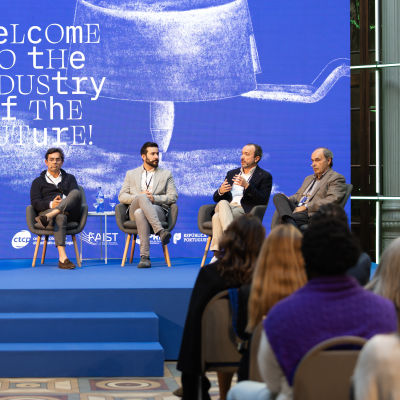
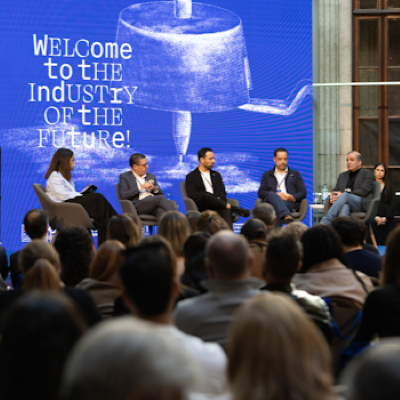
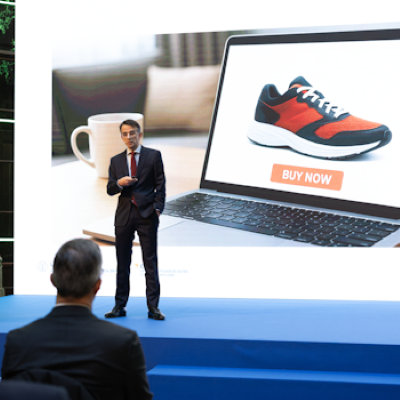
As part of an international conference held under the FAIST Agenda* last November, Beatriz Faria, an expert in AI and data science, brought some insights into how artificial intelligence (AI) is being implemented across the footwear industry.
AI is already being used in the conception and design of footwear products, as well as in optimising their aesthetics and functionality. These applications enable faster prototyping, including through 3D printing, and support customisation and material selection by assessing physical properties, cost efficiency, and environmental impact. Examples include NewArc, a platform that converts sketches into realistic 3D designs, and Volumental, a 3D scanner that can capture foot measurements in seconds.
On the production side, AI is being widely used to enable tasks such as cutting, sewing and component assembly to be carried out more quickly and precisely. It is also being increasingly used in quality control and manufacturing processes, enabling real-time adjustments to be made on the factory floor. One example is Swiss sportswear brand ON, which has opened a new factory where robots can produce running shoe components in just five minutes via a fully automated process. Meanwhile, KIN is planning a new facility that will rely on robots to handle more demanding production tasks.
At the level of supply chain management, AI-powered tools can be used to forecast product demand based on sales data, social media trends or economic indicators. These tools can help maintain optimal stock levels, reduce unused stock, and plan production. AI can also transform logistics by optimising robotics for distribution, automating stock management, and evaluating suppliers.
Finally, there is its application in the development of smart footwear. Although it sounds like something from the future, it is already a reality. It can be used for performance monitoring, tracking people with visual impairments, measuring the performance of athletes, monitoring the elderly and soldiers, and health monitoring for patients with mobility problems or specific conditions such as diabetes or heart problems.
In this context, Beatriz Faria argues that understanding how AI works, even at a basic level, is essential in order to harness its potential. It is therefore important to bear in mind that adaptability will be key to success in this new era.
* Promoted by APICCAPS (Portuguese Footwear, Components, Leather Goods Manufacturers’ Association) and CTCP (Portuguese Technological Footwear Centre), the event, held on the 18th and the 19th of November, brought together representatives from industry, academia, and public institutions to discuss the main challenges and opportunities associated with digitisation, sustainability, and technological innovation in the Portuguese and European footwear industries.
Source and Image Credits: apiccaps.pt

Related news



Related Organizations

-

-

World Footwear Public Calendar
Click here to subscribe an updated version of the calendar displaying the footwear trade shows.
-

-

-

-

Media Partners
Media Partners
-

SHOES-MAGAZINE.COM

La Conceria

UNIT Publishing House

Shoe Intelligence