


Portuguese tannery exports gain momentum in 2025
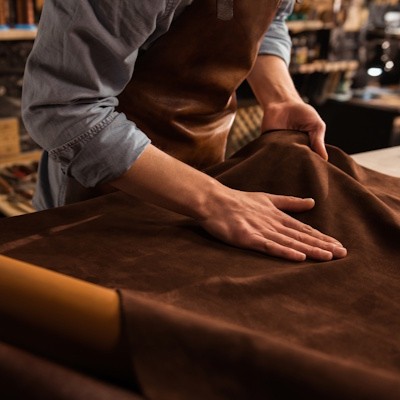
Portuguese tannery exports grew by 5.8% year-on-year up to September 2025, reflecting the recovery in external demand and the ongoing efforts of the sector to modernise production
Portuguese tannery exports grew by 5.8% in 2025. By September, the sector had exported 81 million euros, primarily to Spain (down by 4.6% to 17 million euros), Italy (up by 8.7% to 13 million euros), and France (up by 31.2% to 11 million euros).
According to the APICCAPS (Portuguese Footwear, Components, Leather Goods Manufacturers' Association) Research Office, “this performance reflects the recovery in external demand and the ongoing efforts to modernise production and adapt to global quality and sustainability requirements”.
This growth suggests that Portuguese leather companies are regaining their competitive edge despite recent challenges, such as market volatility and cost pressures. The sector’s resilience is revealed by its ability to maintain high quality standards, comply with European norms, and respond quickly to the needs of demanding customers.
Strategically, this advance in tannery exports benefits not only the tanneries themselves, but also the entire production chain. “A strong leather industry ensures the supply of high-quality raw materials to domestic manufacturers, thereby strengthening the sector’s global competitiveness”, says APICCAPS.
Promotion of leather
This performance comes amid APICCAPS’ efforts to promote this raw material on an international scale. To this end, the organisation has developed several initiatives that aim to “demystify some preconceived ideas” and “examine the arguments that make leather footwear superior”. These include its durability and the fact that it is a by-product of the food industry that can be reused. “Leather is undoubtedly the best raw material on the market”, says Luís Onofre, President of APICCAPS.From a research and development viewpoint, the sector has also been investing in improving the sustainability of leather in recent years. This includes methods of skin preparation and the tanning process. This is why this area is a priority within the BioShoes4All project, which is being developed by APICCAPS and the Footwear Technology Centre.
Source and Image Credits: apiccaps.pt
Related news






Related Organizations

-

-

World Footwear Public Calendar
Click here to subscribe an updated version of the calendar displaying the footwear trade shows.
-

-

-

Media Partners
Media Partners
-

ARS ARPEL

UNIT Publishing House

SHOES-MAGAZINE.COM

La Conceria