


Automation and robotics as a growth engine for the footwear industry
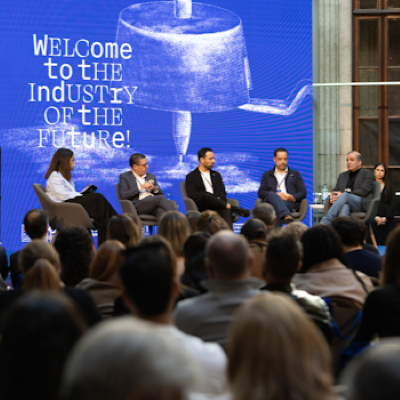
Automation and robotics are shaping the future of footwear manufacturing. Amidst labour shortages and mounting competitive pressures, the sector is transforming the way shoes are produced
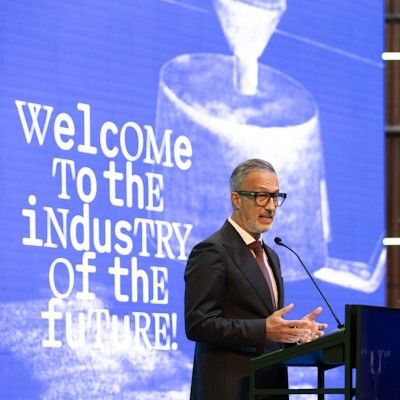
As part of an international conference held under the FAIST Agenda* to address the future of the Portuguese and European footwear industries, a panel was brought together to discuss the topic ‘From Automation to Robotics’. The discussion, which focused on the impact of these changes, was moderated by Cláudia Pinto (Portuguese Footwear Association) and featured representatives from the footwear manufacturing industry: Albano Fernandes (AMF), Ricardo Costa (Rodiro), Vítor Almeida (Tropimática) and Ventura Correia (Carité).
Vítor Almeida addressed the challenges involved in implementing robotics in a shoe factory, stating that “putting robots to work making cars is child’s play compared to robots making shoes”. He explained that robotics in footwear is advanced because it must constantly adapt to natural products, which vary greatly, and new fashion trends, with at least two collections released per year. Thus, implementing robotics in a factory presents two major challenges: adapting robots to the reality of the shoe factory and ensuring that technicians are available to reprogram and adjust the robots to the needs of shoe production.
He also warned that companies that do not invest in technology within a certain period of time will not be able to produce in Europe because they will not have the labour force to perform even the most basic operations, except in some very specific market niches. This helps to explain the intensive introduction of robots in the footwear industry: “A young person who leaves school with more qualifications and training is not willing to spend eight hours a day on the factory floor brushing glue onto uppers. That is the reality”.
Ventura Correia points out that “the incorporation of automation in companies is necessary to ensure consistent productivity with less human effort”. In fact, “robots are important so that we can have people available to perform tasks in their exclusive sphere”.
Ricardo Costa uses the Rodiro case as an example to warn that even when investing in robotics, it is necessary to continue investing in people. Although robotisation leads to greater efficiency and productivity because staff are less tired, it is also necessary to invest in staff who are prepared for these changes. Albano Fernandes also shares this view. “Today, everyone wants to work with a robot. There are no longer any ‘shoemakers’, so the process is not about laying people off, but rather helping them to adapt to their new role, as there are no surplus staff”.
However, Albano does not mean to suggest that know-how is unimportant, but rather that the two must be combined: “We will be successful in Portugal when we manage to reconcile robotisation with know-how. We are shoemakers par excellence and very proud of it, but we must manage to combine the two, where people are essential and the work is different”.
Ventura Correia states that “we have to create new professions based on programming, CAD or CAM systems to maintain product quality, rather than focusing on quantity, because China has that covered”. He adds that “anyone who thinks investing in a robot will initially result in better quality and greater quantity with fewer people is mistaken”.
Vítor Almeida believes that the cost of a successful transition is more important than the cost of the equipment itself, because a company that is not currently automated and wants to invest in robotics and industrial automation in-house has to take a big step. “Let’s not sugarcoat it: this is a complex process that depends heavily on implementation”.
* Promoted by APICCAPS (Portuguese Footwear, Components, Leather Goods Manufacturers’ Association) and CTCP (Portuguese Technological Footwear Centre), the event brought together representatives from industry, academia, and public institutions to discuss the main challenges and opportunities associated with digitisation, sustainability, and technological innovation in the Portuguese and European footwear industries.
Source and Image Credits: apiccaps.pt

Related news


Related Organizations

-

-

World Footwear Public Calendar
Click here to subscribe an updated version of the calendar displaying the footwear trade shows.
-

-

-
-

Media Partners
Media Partners
-

SERMA

Shoe Intelligence

Schuhkurier

ARS ARPEL