


Rethinking business models in a changing footwear market
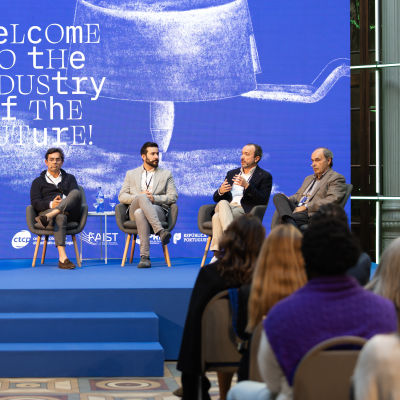
In response to evolving market conditions, footwear companies are reshaping their business models through customisation, digitalisation and the use of artificial intelligence
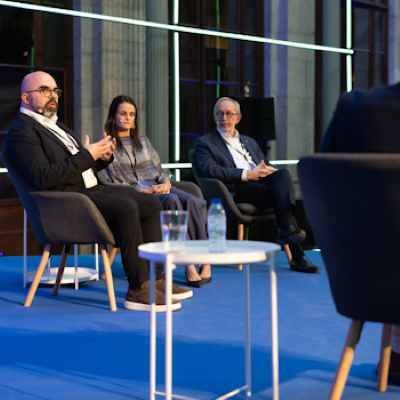
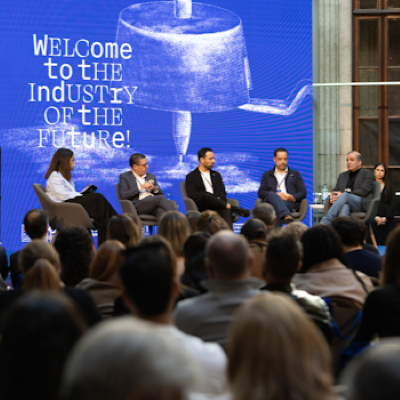
As part of an international conference held under the FAIST Agenda*, a panel was brought together to discuss how business models need to be shaped and adapted to the current situation. Moderated by Gonçalo Garcia from the Portuguese Footwear Association (APICCAPS), the discussion featured interventions from Fernando Ferro (CCSI Pro), Flávio Ferreira (Bolflex/Rubberlink), João Esteves (Diverge) and Rui Moreira (Portuguese Footwear Technological Centre - CTCP). ´
According to Rui Moreira, head of CTCP’s business organisation and management department, developing the footwear sector’s business model involves factors other than price. “It’s basically about understanding our DNA, what sets us apart, who our target audience is, how to reach them and how to develop our internal processes so that our target audience recognises our unique selling point”, he explains.
For example, at Diverge they implemented a business model that does not produce stock, thus discarding the traditional mass production paradigm. To this end, the company has created a brand and developed technology that enables customisation, proving that small batches or ‘one-off’ items can be produced efficiently. According to João Esteves, the biggest challenge was “understanding the best way to carry out this type of production in two to three weeks, because anything more than that becomes difficult to manage in this era of immediacy”.
Flávio Ferreira from Bolflex/Rubberlink emphasises that “demand for customised products has increased, and this is closely related to brands wanting to distinguish themselves from each other. We have therefore moved from aesthetic customisation to something much deeper”. Thanks to their vertical structure and strong focus on circularity and automation, they can easily follow up on requests for product customisation, as they do not depend on third parties. He advises that “all entrepreneurs who have not yet started the digitisation process should do so, as it significantly improves the gathering of information”.
João Esteves also highlights the importance of technology at various stages of the process, such as during initial customer contact and when organising order forms before they are sent to partners, in order to optimise work processes. This enables them to “use technology to create slightly disruptive business models”. According to Fernando Ferro, however, “to optimise the use of different technologies, it is necessary to master the entire process in-house and foster strong collaboration between teams from different areas”.
For Flávio, “this was the year with the best production efficiency since Bolflex began recording data, and this is largely thanks to the digitalisation that has been implemented”. They are still ironing out some kinks, particularly in processing data collected on the factory floor through the incorporation of AI. Fernando Ferro adds that “with artificial intelligence and the integration of these new technologies, we have solved the problem of human dependence when it comes to information”.
João Esteves also believes that AI has catalysed and facilitated processes for a company that does not have all the resources it would like, listing three examples. “At the moment, we are self-sufficient in programming our website. In the area of communication, we have been using software to create content. The third example involves creating an agent to advise our customers, because while customisation and personalisation are important, they can lead to decision paralysis”.
* Promoted by APICCAPS (Portuguese Footwear, Components, Leather Goods Manufacturers’ Association) and CTCP (Portuguese Technological Footwear Centre), the event, held on the 18th and the 19th of November, brought together representatives from industry, academia, and public institutions to discuss the main challenges and opportunities associated with digitisation, sustainability, and technological innovation in the Portuguese and European footwear industries.
Source and Image Credits: apiccaps.pt

Related news
Related Organizations

-

-

World Footwear Public Calendar
Click here to subscribe an updated version of the calendar displaying the footwear trade shows.
-

-

-
Media Partners
Media Partners
-

Shoe Intelligence

UNIT Publishing House

ARS ARPEL

La Conceria