


European footwear and apparel industries face reindustrialisation challenges

With production still concentrated in Asia, the European footwear and apparel industries are navigating reindustrialisation, with value-added manufacturing, regulation and sustainability emerging as key factors
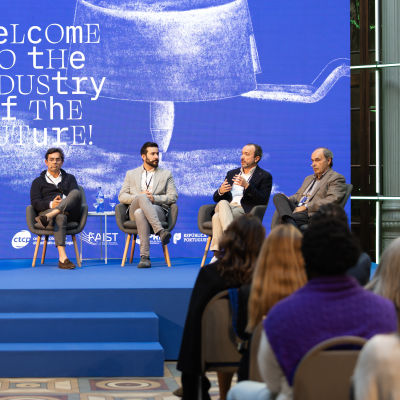
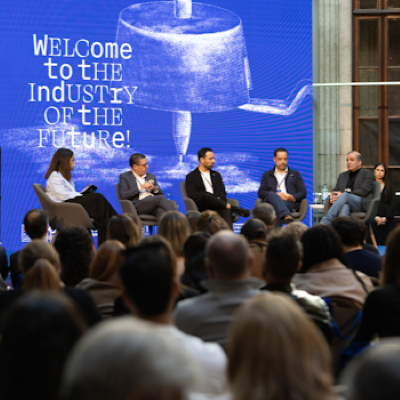
As part of an international conference held under the FAIST Agenda*, a panel analysed the current commercial and industrial landscape in the EU amid growing global competition from Asian producers. Moderated by journalist Estela Machado, the discussion, which addressed the question “Is Europe really moving towards reindustrialisation?”, brought together César Araújo from ANIVEC (National Association of Clothing, Apparel and Fashion Industries), João Maia from APICCAPS (Portuguese Footwear, Components, Leather Goods Manufacturers’ Association) and Kerstin Jorna from DG GROW.
In a recorded message, Kerstin Jorna, who was unable to attend the debate, referred to the Portuguese footwear industry as “a success story, combining tradition with technology”. Her remarks came against a challenging backdrop: while European footwear production accounted for 30% of global output three decades ago, it now represents less than 3%.
João Maia attributed this decline to the rise of new players, particularly from Asia, which has reshaped global market shares. Nevertheless, Europe has managed to retain the highest value-added stages of production by focusing on design, brand management, and premium and luxury footwear. Currently, the majority of the 3% produced in Europe falls within these segments, while mass production has largely shifted to Asia. Portugal, Spain and Italy are among the few countries that still preserve traditional manufacturing skills.
There has also been a profound transformation in the commercial context of the clothing sector. César Araújo argued that “Europe has allowed third countries to use the European market without the same rules, which makes competition unfair”, and challenges policymakers to focus their efforts on “market reciprocity”. He also highlighted the widespread evasion of taxes by third countries through unpaid customs duties and VAT. João Maia agreed, noting that although the European Commission has announced regulatory changes, these are not expected to take effect until 2028.
Regarding reindustrialisation, João Maia believes that the slowdown in Chinese exports could lead to factories being brought closer to markets. However, figures show that factories are opening in more competitive Asian countries. He argues that “reindustrialisation means bringing production to Europe, where our skills can create competitive European companies and businesses”.
César Araújo argued that the “European industry must transform itself and be based on value-added products in a circular economy”, but this will only happen if the rules and legislation are the same for all companies, whether they are European or export to Europe. He highlighted the fact that introducing chemicals harmful to human health into products is prohibited, a rule that currently only applies to European companies, and the introduction of the Digital Product Passport.
Both speakers agreed that Europe’s competitiveness hinges on more agile and balanced regulation, as well as robust sustainability frameworks. Although significant challenges remain, the panel concluded that the clothing and footwear industries must strengthen their collective voice if they are to influence policy decisions.
*Promoted by APICCAPS (Portuguese Footwear, Components, Leather Goods Manufacturers’ Association) and CTCP (Portuguese Technological Footwear Centre), the event, held on the 18th and the 19th of November, brought together representatives from industry, academia, and public institutions to discuss the main challenges and opportunities associated with digitisation, sustainability, and technological innovation in the Portuguese and European footwear industries.
Source and Image Credits: apiccaps.pt

Related news


Related Organizations

-
-

World Footwear Public Calendar
Click here to subscribe an updated version of the calendar displaying the footwear trade shows.
-

-

-

-
Media Partners
Media Partners
-

La Conceria

Schuhkurier

Fotoshoe

Revista del Calzado