


New Generation: meet Dalida de Freitas Durrier, VIRAL
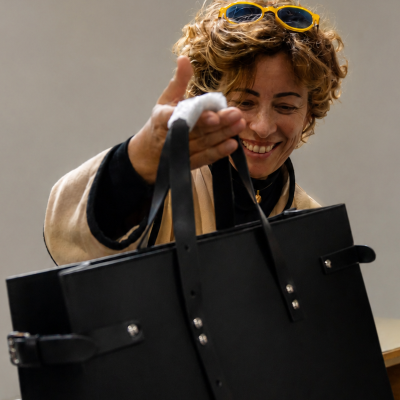
VIRAL is a Portuguese handbag brand founded by Dalida de Freitas Durrier. Using upcycled leather, it creates contemporary designs that combine exclusivity with a more conscious approach to production
Was working in the footwear and leather goods industry a natural choice?
I was born and raised in France, where I also completed my degree in Business Management. For several years, I worked in human resources and consulting, an experience that gave me a deeply human perspective on people, brands and relationships.Design came into my life intuitively rather than through formal education. I learned by observing, through sensitivity, experience and making. That free and deeply personal journey ultimately shaped the identity of my work.
Creating handbags and working with leather, especially unused leather from surplus production, felt like a natural path. I have always been fascinated by its texture, its smell and the way it feels. Leather is a living material that evolves over time, acquiring marks, depth and character. Every piece changes with the person who wears it. To me, leather is not just a material; it is a storyteller.
How would you define VIRAL and what sets the brand apart?
VIRAL is where contemporary design meets authentic craftsmanship. We create leather bags and accessories that challenge traditional codes while expressing a strong and distinctive identity.Our philosophy is deliberately Anti-Code. We do not follow fleeting trends or create products designed to act as billboards for logos. Instead, we develop bold, geometric and timeless designs for people who prefer expressing their own identity rather than wearing someone else's.
Another defining element is our exclusive use of deadstock leather. Working with existing materials is both an ethical and a natural choice for us. Every hide has its own unique characteristics and continues to evolve over time, making each piece truly one of a kind.
We produce in small quantities, valuing exclusivity over mass production. Our goal is to transform what could become waste into highly desirable objects with a strong visual identity and exceptional craftsmanship.
What have been your biggest challenges so far?
I would say the first challenge was earning my place within the industry itself. As an emerging brand, building relationships with Portuguese manufacturers required a great deal of perseverance. At times, I encountered limited openness towards small-scale, conceptual projects, as well as a certain reluctance to embrace the complexity of my designs.Finding partners who genuinely valued the project was not easy, but I never questioned my decision to manufacture in Portugal because of its exceptional craftsmanship. Eventually, I found people who believed in the brand, proving that persistence truly pays off.
Another major challenge has been visibility. In a market dominated by global brands and constant digital noise, reaching the right audience requires continuous effort. The challenge is to grow without compromising the identity and values that define VIRAL.
Finally, there is the complexity of upcycling itself. Working with limited quantities of deadstock leather means constantly reinventing the collection. Once a particular material runs out, there is no simple replacement. What could be seen as a logistical limitation has become one of our greatest strengths: every piece is genuinely exclusive.
What advice would you give to a young person starting out in the industry?
My advice is to stay grounded in reality. At the beginning, there is little value in becoming obsessed with timelines or long-term success. The most important thing is to focus on the next step and keep moving forward consistently, one day at a time.Resilience is essential, but just as important is protecting your own identity. It is very easy, especially at the beginning, to fall into the trap of copying trends or following what seems to be working for others. In the end, authenticity is what truly sets a brand apart.
It is also important to understand that building a brand involves much more than designing products. You need to understand sales, management, communication, production and even accounting. Leading a brand requires a broad perspective and the ability to navigate all these areas simultaneously.
At the same time, trust your instincts, but surround yourself with the right people. No one builds a successful brand alone. Above all, do not be afraid to experiment. Test your ideas, accept that mistakes are inevitable, and recognise that they often provide the most valuable lessons. There are no shortcuts. A meaningful journey is built through consistency, self-awareness and responsibility for what you create.
For more information about VIRAL, visit the website.
Source and Image Credits: portugueseshoes.pt
Related news

Related Organizations

-
-

World Footwear Public Calendar
Click here to subscribe an updated version of the calendar displaying the footwear trade shows.
-
-

-
Media Partners
Media Partners
-

SHOES-MAGAZINE.COM

Fotoshoe

Shoes Report

Revista del Calzado