


FAIST Voices: meet Belcinto

As part of the FAIST project, the Portuguese leather goods manufacturer Belcinto was able to innovate existing technology, optimising several production processes and facilitating work that would otherwise be time-consuming
The FAIST (Agile, Intelligent, Sustainable and Technological Factory) consortium brings together over 40 Portuguese partners across footwear and leather goods, technology providers and research centres. Running from June 2022 to June 2026, the programme channels about 50 million euros of investment into projects that modernise the industry and sharpen its international competitiveness.
Belcinto In Focus
Founded in 1961, Belcinto is a leather goods company based in São João da Madeira, Portugal. Originally specialising in the production of belts, the company has gradually expanded its portfolio to include handbags, school bags, travel bags, hats and women’s accessories.Today, Belcinto is renowned for its high-quality leather products, which are crafted with a strong emphasis on sustainability, durability, and repairability. But “what we offer our customers is not just a product, but a whole package: a product, a service, security, and after-sales support,” highlights Ana Maria Vasconcelos, General Manager of the Commercial and Production Department at Belcinto.
Since 2008, the company has experienced significant growth and begun collaborating with medium- to high-end customers. “We are looking for customers whose values align with our own – this includes their market image, their employees, their working methods, and, of course, their payment practices. Everything forms part of the company’s ethics”.
Under FAIST
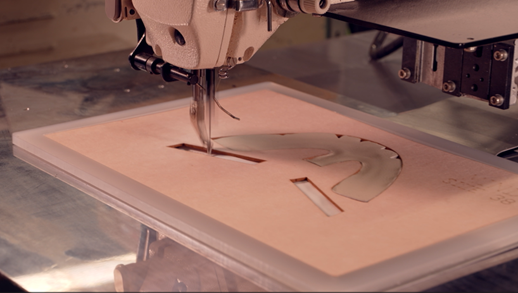
Ana Maria Vasconcelos emphasises the benefits of collaboration among the partners of the consortium. “These projects are (...) more interesting to us from an innovation perspective than from a purely financial one”. Within the FAIST framework, Belcinto has partnered with the Portuguese technology and software company Mind to implement three digital innovations that are reshaping its production processes.To optimise automatic sewing operations, Belcinto was a partner on the development of Mind SewingStudio: an open, modular solution for defining sewing pallets and paths in the manufacture of footwear and leather goods. The system supports standard industrial file formats and provides visual tools for positioning, measuring and validating sewing operations. This allows for integration with CAD systems and sewing machines.
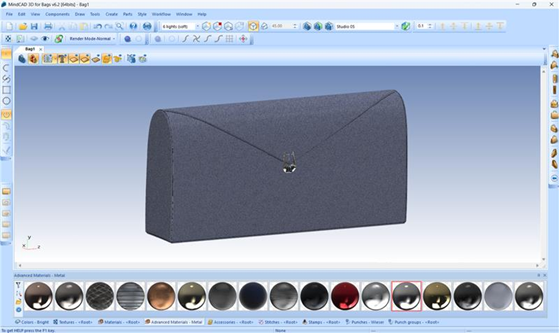
The company has also adopted Mind BagDesign, a specialised 3D CAD system for designing bags and leather goods. This solution combines sketch-based design approaches with digital engineering tools to offer real-time visualisation, material libraries and pattern creation. Collaboration is supported through integration with MindCLOUD and Mind PDM.
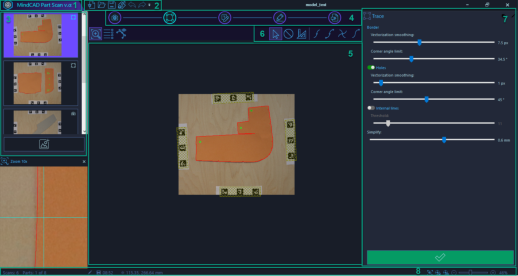
The third solution developed implemented in Belcinto was PartScan: an integrated hardware and software system for digitalising physical archives, such as cardboard moulds and leather patterns or components. Using calibrated, camera-based capture technology, PartScan converts physical parts into digital data via a structured workflow involving capture, correction and annotation.
FAIST Outcomes
Ana Maria is convinced that the Mind SewingStudio solution will enable the company’s employees “to perform tasks that would otherwise require a lot of training and expertise”. This, she notes, is particularly important at a time when attracting younger workers has become increasingly challenging. The solution also provides a basis for training technicians and achieving independence in developing and maintaining automatic seam solutions, reducing reliance on expensive external suppliers.As for the Mind BagDesign, its design interface combined with engineering outputs (2D patterns and production-ready data) enables accelerated prototyping, reduces material waste by reducing the need of physical samples, and bridges the gap between creative and production processes.
PartScan, instead, has solved a long-standing problem relating to Belcinto’s extensive physical archive. With over 60 years’ worth of accumulated materials, storage and retrieval had become increasingly complex. Digitalising the archive means that the leather goods can now be accessed quickly, with the resulting data feeding directly into the production chain. “This greatly facilitates work that used to be time-consuming and will lead to significant time savings for the company”.
You can explore more about the FAIST project here.
Visit Belcinto’s website here.
Image Credits: CTCP and Portuguese Shoes

Related news





Related Organizations

-

-

World Footwear Public Calendar
Click here to subscribe an updated version of the calendar displaying the footwear trade shows.
-

-

-

-

Media Partners
Media Partners
-

Schuhkurier

SHOES-MAGAZINE.COM

Shoe Intelligence

SERMA