


FAIST Voices: meet Vapesol
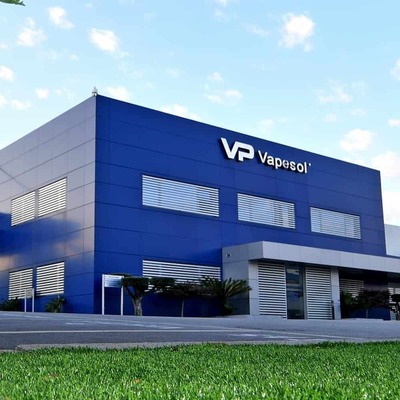
Part of the FAIST consortium, Vapesol is focusing on product development to bring more sustainability and circularity to the sole manufacturing process
The FAIST (Agile, Intelligent, Sustainable and Technological Factory) project is a consortium of more than 40 Portuguese partners, comprising footwear, components and leather goods manufacturers, technology developers and research institutions.
The project aims to modernise the national footwear industry by driving technological innovation and reinforcing international competitiveness, spanning from June 2022 to June 2026. Over the four years, around 50 million euros of investment have been committed to the project.
Vapesol
Located in the northern district of Porto, Vapesol was founded in 1998. Décio Pereira, Manager at the company, shares that his father founded it on a modest scale with a small team before expanding through gradual investment and a stronger focus on innovation.
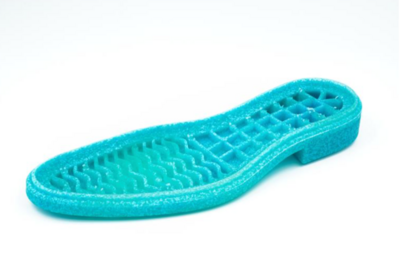
In its earlier phase, Vapesol’s core business centred on rubber-like thermoplastic soles (TR), serving fewer clients with larger order volumes and less colour and product range variation. Pereira argues that market conditions later shifted sharply, pushing the company to prioritise differentiation and broaden its material portfolio.
That shift translated into successive investments in new production capabilities, notably the introduction of TPU (Thermoplastic Polyurethane) production in 2009 through new equipment and the start of EVA (Ethylene-Vinyl Acetate) production in 2018. Today, he frames Vapesol’s main output as soles in TPU, TR and EVA, with other products made on a smaller scale.
Under the FAIST
According to the Manager, a major driver of the recent transformation is the FAIST programme. He explains that, while the company had numerous ideas, constraints linked to finance, human resources and space often delayed implementation, and the programme helped bring forward projects that might otherwise have taken several more years to realise.
One of the most prominent projects focuses on EVA, where Vapesol plans to expand capacity significantly and add equipment not previously used in Portugal. Pereira frames EVA as a material historically associated with high non-recyclable waste rates and describes an effort to tackle the problem at the source by reducing scrap before attempting reuse.
In addition, another objective is to leverage residuals from both EVA and tanning to produce EVA soles. Similar circularity efforts are being pursued in TPU, including trials that incorporate residues from other industries, such as discarded medical gloves. Pereira links this to broader product development, noting that these innovations also increase energy needs, which the company is addressing through efficiency measures and on-site generation.![]()
![]()
FAIST Outcomes
The waste-reduction project is built around data and process control to bring EVA waste below 10%, supported by software-driven monitoring of parameters that quickly diagnose and correct defects.
In parallel, the reintegration of EVA residues back into production is planned to happen through an automated process, alongside experiments that involve taking back worn shoes, separating materials and feeding EVA and upper components into new production cycles.
Portuguese Industry
In a wider view of the sector, Pereira characterises Portugal’s sole and footwear cluster as unusually dense and integrated, with manufacturers, mould makers, component suppliers and footwear factories located within short distances of one another.
He argues that this proximity, combined with sustained investment and a culture of continuous improvement, positions the cluster for a challenging but potentially strong decade, provided it continues to prioritise quality, differentiation, and rapid-response processes while making better use of human labour rather than seeking to remove it.
More information about FAIST is available on the project's website: here.
Visit Vapesol’s website here.
Image Credits: FAIST and Vapesol
Related news





Related Organizations

-

-

World Footwear Public Calendar
Click here to subscribe an updated version of the calendar displaying the footwear trade shows.
-

-

-
-

Media Partners
Media Partners
-

SERMA

Shoes Report

Fotoshoe

ARS ARPEL