


FAIST Voices: meet DCSI PRO
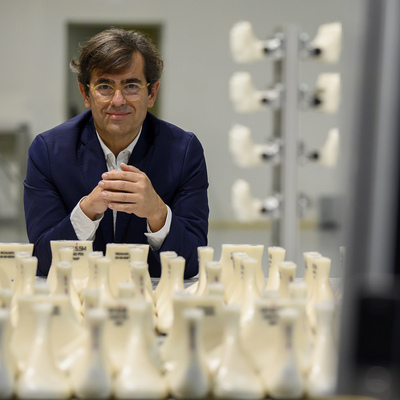
Part of the FAIST consortium, DCSI PRO is developing automation, robotics and digital solutions to support the technological transformation of footwear production
The FAIST (Agile, Intelligent, Sustainable and Technological Factory) project is a consortium of more than 40 Portuguese partners, comprising footwear, components and leather goods manufacturers, technology developers and research institutions.
The project aims to modernise the Portuguese footwear industry by driving technological innovation and reinforcing international competitiveness, spanning from June 2022 to June 2026. Over the past four years, around 50 million euros in investment has been committed to the project.
DCSI PRO
DCSI PRO is a technology-driven company active in process engineering, special equipment development, automation and robotics. Led by Fernando Ferro, it has grown from a small entrepreneurial project into an industrial technology player with advanced equipment and the capacity to serve clients in Portugal and abroad.
Fernando Ferro’s own path is closely linked to the company’s identity. Having started working at a young age, he later trained professionally in industrial maintenance before founding his own company at the age of 25. The business began with electrical installations and small technical works, initially from a garage, before gradually moving into equipment development, machining and automation.
Today, the companies operate with a strong focus on technological capability and industrial competitiveness. According to Ferro, investment in advanced machinery has been essential to compete with international players. This approach has also supported the group’s international activity, with work developed for markets including Europe, Asia, the United States, Ecuador and Mexico.
The company’s growth is also rooted in a family partnership. Fernando Ferro and his brother built the business together as equal partners, with a management relationship based on shared decisions and mutual trust. This background helps explain the group’s emphasis on long-term relationships, technical reliability and close cooperation with clients and partners.
Under the FAIST
Within FAIST, DCSI PRO is contributing to several developments with a high technological component, particularly in automation, robotics, process engineering and digital production control.
These include the High Frequency Fusion Cell, developed with AMF and Carité, which validates advanced fusion processes for producing footwear uppers through sequential hot pressing, cold stabilisation and high-frequency moulding.
Another development is the Integrated Line: From Yarn to Shoe, created with AMF. This solution introduces an injection process that combines sole moulding and upper bonding in a dual-station bi-density polyurethane system.
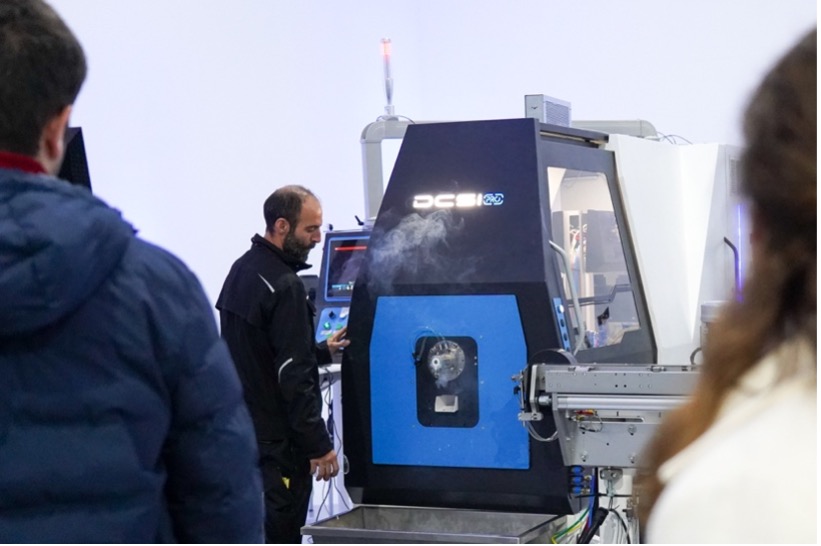
DCSI PRO is also working with Carité on an Integrated Line for Multiproduct manufacturing. This line combines conveyors, injection machines, RFID-enabled pallets (Radio Frequency Identification), programmable mounting and unmounting stations, and a hot tunnel for thermal stabilisation.
In robotics, DCSI PRO is developing two solutions with Armipex. The Robot Station PRG brings pounding, roughing and glueing (PRG) into a single robotic cell, using a six-axis robot with interchangeable tools, RFID or 3D vision scanning, and automatic trajectory generation.
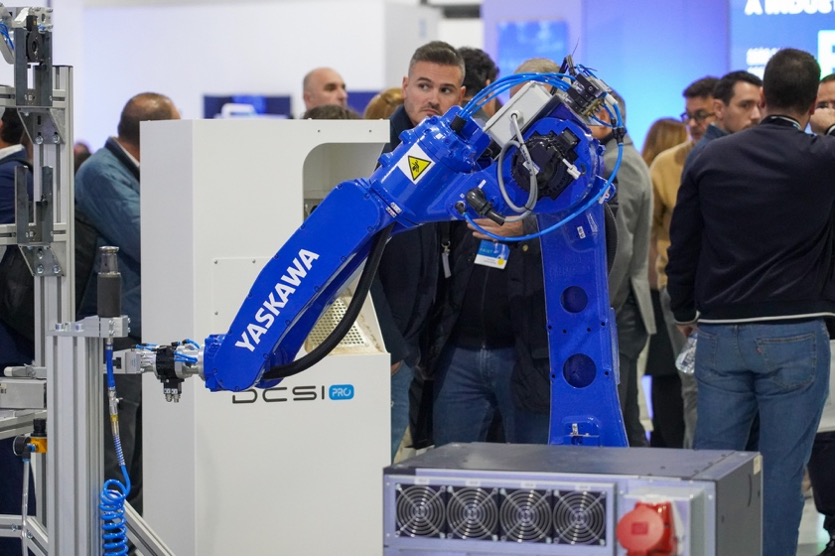
The Robot Tool Testing Station is designed to validate robotic tools for operations such as roughing, trimming, water-based glue application, solvent application and last handling.
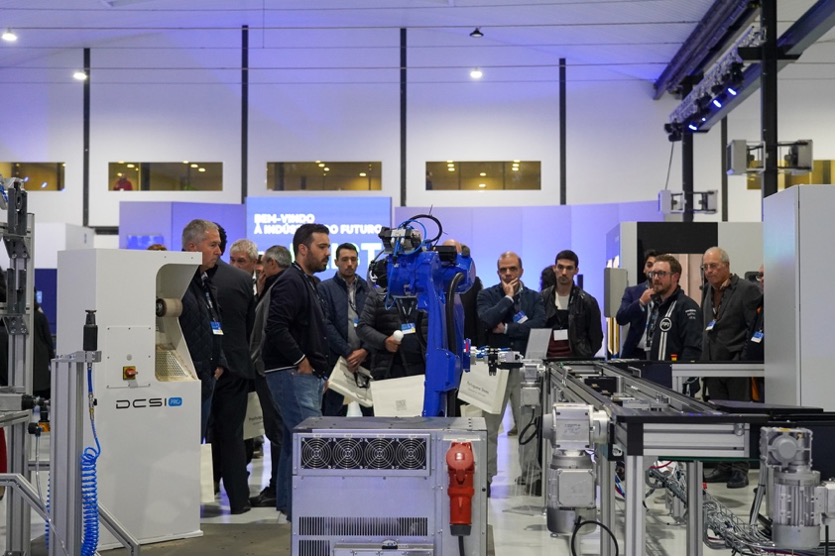
FAIST Outcomes
These projects are expected to support a more automated, traceable and flexible model of footwear production. The High Frequency Fusion Cell aims to reduce manual operations in upper production while improving material cohesion, durability and resistance through controlled pressing and stabilisation processes.
The Integrated Line: From Yarn to Shoe and the Integrated Line for Multiproduct point towards more connected production flows, combining injection, bonding, RFID tracking, real-time monitoring and centralised software control. Their expected contribution lies in reducing the number of production steps, improving process consistency and enabling faster reconfiguration for different products.
The robotics projects (Robot Station PRG and Robot Tool Testing Station) are intended to increase repeatability and precision in labour-intensive pre-assembly operations. By automating tasks such as roughing, glueing, trimming and last handling, these systems can help improve bonding quality, reduce variability and prepare the ground for scalable robotic integration in footwear factories.
FAIST Relevance
Fernando Ferro sees FAIST as a project built around collaboration. “FAIST would not make sense for DCSI alone if we did not have partners, partners with challenges”, he shares. For him, the value of the consortium lies in bringing together technology companies and footwear manufacturers to identify concrete production problems and test new solutions in real industrial settings.
A central part of this work is integrating Industry 4.0 principles into footwear production. Artificial Vision is also being applied for quality verification and component placement, reinforcing the role of digital monitoring in future footwear factories.
For Ferro, automation should be seen as a way to reorganise production and give people more valuable tasks. “Those routine tasks, where we can guarantee repeatability, are the ones where companies should start investing”, he argues. Machines can increasingly handle repetitive operations, while workers can be redirected towards tasks requiring greater responsibility, judgement and added value.
However, this transition also requires adaptation. Ferro stresses that companies cannot simply automate existing processes without changing the way they work. New tools, layouts, methods and investments are required, and returns may only appear over time. This is where FAIST plays an important role: “FAIST gives companies financial room to take risks, because it is necessary to take risks”, he notes.
Visit the DCSI PRO website for more information.
Image Credits: FAIST and eco.sapo.pt (cover)



Related Organizations

-

-

World Footwear Public Calendar
Click here to subscribe an updated version of the calendar displaying the footwear trade shows.
-

-

-
Media Partners
Media Partners
-

Schuhkurier

Shoe Intelligence

La Conceria

SHOES-MAGAZINE.COM