


FAIST Voices: meet Carité Shoemaking Group
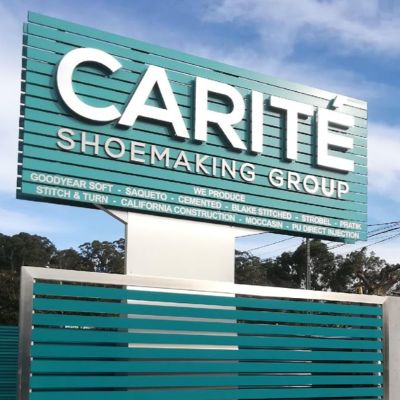
A key partner of the FAIST consortium, Carité is testing and developing technologies that support automation, digitalisation and more sustainable footwear production
FAIST (Agile, Intelligent, Sustainable and Technological Factory) is a multi-partner project with more than 40 actors across manufacturing, technology and research, designed to push the footwear and leather goods sector into a more digital, efficient and competitive era. It runs from June 2022 to June 2026 with approximately 50 million euros of investment.
Carité in focus
Carité has roots dating back to 1986, when the activity began as an individual business providing sewing services for the footwear sector. Reinaldo Teixeira, Manager at Carité, recalls that the company started with “a reduced workforce” and built its early growth through the “quality of the service provided”, working for some of the most relevant footwear factories in the Felgueiras region, in the North of Portugal.The company was formally established in May 1990 and, in 1994, took a further step by moving towards producing complete footwear through its own product development. Teixeira explains that the company began to focus on “high-quality footwear” and adopted “an aggressive commercial attitude”, which helped it strengthen its presence in international markets.
Since 1995, Carité has exported practically all of its production, working mainly for international brands that purchase footwear under their own labels. As Teixeira notes, the company’s client base comprises “major international brands”, reflecting its positioning as a Portuguese manufacturer serving demanding external markets.
For Teixeira, the company’s current challenge is preparing for a different stage in footwear production. His role, he says, is to “direct the future of Carité” through new technologies expected to transform the sector. This means continuing to produce traditional footwear well, while also creating conditions for a more automated, intelligent and higher-value manufacturing model.
FAIST Relevance
Carité’s involvement in FAIST is closely linked to the pressure felt by Portuguese manufacturers in a market where price remains a central concern. Teixeira says that brands producing in Portugal are increasingly focused on cost, while factories face rising expenses throughout the year. “We have costs increasing every month and during the year”, he points out, arguing that companies need new technological paths to protect their competitiveness.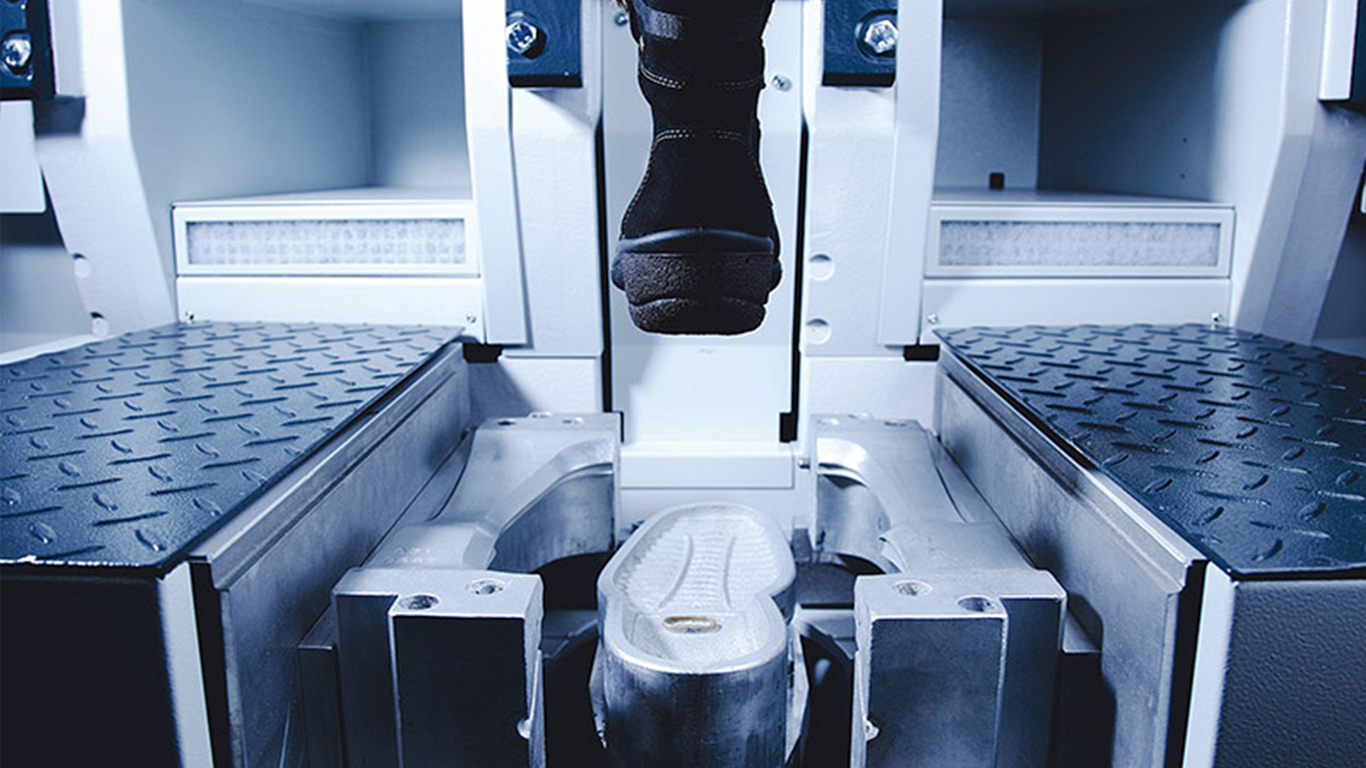
This is why Carité sees FAIST as part of a wider shift towards automation, robotisation and smarter production lines. Teixeira argues that Portuguese manufacturers must “mechanise” and move towards “more automatic, more intelligent, robotised lines”, allowing them to produce different types of footwear and reach medium-high and top-tier brands with products of greater added value.
For Carité, this transformation is also connected to the future of work in the footwear industry. Teixeira believes that automation can help companies produce better-paid footwear and, in turn, create conditions to “pay workers more” and attract younger generations. In his view, if the sector integrates automation and design, it can become more appealing to graduates and technical profiles who might otherwise choose other industries.
Under FAIST
Within FAIST, Carité is involved in a wide range of developments, often as a footwear partner and testing environment for new technologies. These include multifunctional bioplastic coatings for footwear, developed with the University of Aveiro, which explore sustainable materials for performance coatings for components such as insoles and uppers.Carité is also participating in research on 3D printed footwear lasts, in collaboration with the University of Aveiro and CTCP. This project investigates additive manufacturing as a way to produce lighter and more adaptable lasts for planning, prototype assembly and production, reducing the need for heavy and costly traditional resin lasts in early development stages.
Another development being tested at Carité is the equipment for water-based polymer immersion solution, developed by Tecmacal. The prototype equipment is designed to manufacture footwear soles by immersion, allowing precise control of the immersion level to form soles with the desired height directly through a water-based polymer process.
Carité is also involved in inspection and control using artificial vision, a solution developed by Centimfe for inspecting cutting tools. The system checks tool geometry, analyses the condition of picks, scribers and ejectors, and validates marked references and codes, supporting greater control over tooling quality.
In upper production, Carité is one of the partners testing the High Frequency Fusion Cell, developed by DCSI Pro. The solution validates advanced fusion processes for footwear uppers through sequential heat pressing, cold stabilisation and high-frequency moulding, combining multi-layer textiles, TPU films, reinforcements and decorative designs directly into the uppers.
Carité is also involved in DCSI Pro’s Integrated Line for Multiproduct. This flexible production line combines conveyors, injection machines, RFID-enabled pallets, programmable mounting and unmounting stations, and a hot tunnel for thermal stabilisation. The system is prepared for robotic integration and aims to support traceable, adaptable and automated workflows for different footwear products.
On the digital side, Carité is testing tools for the integrated management of a flexible footwear production line, developed by Olifel. These Visualgest modules cover planning, shipping, sample management and RFID tracking, using AI, real-time data and automated documentation to improve visibility across production and logistics.
Carité is also part of the work on standard communication for universal information exchange, through a Document Integration module developed by Olifel. The solution supports the import and export of CIUS-PT standard documents, improving interoperability, reducing documentation errors and enabling more reliable financial, stock and logistics workflows.
The company is also involved in SADIC, a performance evaluation system for the footwear industry developed in collaboration with Expandindustria and INESC TEC. The system analyses key indicators obtained from the eCODICEC process management application, using workflow data collected from service processes and, in manufacturing, digital twins connected to the factory floor.
FAIST Outcomes
The expected outcomes of Carité’s participation in FAIST are linked to automation, sustainability, digitalisation and the development of higher-value footwear production.The company’s role as a testing and validation partner places it at the centre of several technologies designed to move footwear manufacturing towards more intelligent and flexible processes. These developments are part of a broader strategy to move beyond traditional production and prepare for a more technological future.
As Teixeira highlights, the aim is to continue producing footwear well while creating “a different future” through automation, robotisation and better-qualified teams. In this context, FAIST supports both the company’s transformation and the wider modernisation of Portuguese footwear manufacturing.
You can explore more about the FAIST project here. Visit the Carité Shoemaking Group website here.
Image Credits: carite.pt

Related news




Related Organizations

-

-

World Footwear Public Calendar
Click here to subscribe an updated version of the calendar displaying the footwear trade shows.
-

-

-
Media Partners
Media Partners
-

ARS ARPEL

Revista del Calzado

SHOES-MAGAZINE.COM

Shoe Intelligence