


US Supreme Court rules against Trump’s emergency tariffs
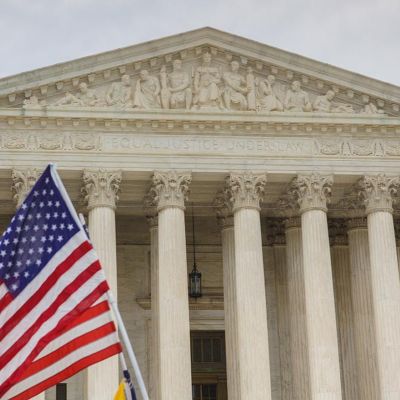
The US Supreme Court has ruled against former President Donald Trump’s use of emergency powers to impose sweeping tariffs. This has prompted reactions from US retail groups and international industry stakeholders
In a 6-3 decision on the 20th of February, the US Supreme Court ruled in a 6-3 decision that Trump’s use of the International Emergency Economic Powers Act of 1977 to impose tariffs on other countries unilaterally was unconstitutional. Chief Justice John Roberts, along with Justices Amy Coney Barrett and Neil Gorsuch, joined the court’s three liberals to form the majority.
“The President asserts the extraordinary power to unilaterally impose tariffs of unlimited amount, duration, and scope. In light of the breadth, history, and constitutional context of that asserted authority, he must identify clear congressional authorization to exercise it”, wrote John Roberts, declaring that the 1977 law Trump cited to justify the import duties “falls short” of the congressional approval that would be required.
Since April 2025, Trump had used the Act to impose tariffs on almost all other countries, as well as higher tariffs on some of the United States’ top trading partners, including Canada, Mexico, China, the European Union and Japan.
Trump reacted to the high court’s decision by denouncing the ruling as “deeply disappointing” and a betrayal of the US. He also insisted that it would have little practical consequence, as his administration would reimpose similar or larger tariffs using other authorities.
Retail and Industry Organisations Reactions
Matt Priest, President and CEO of the Footwear Distributors and Retailers of America (FDRA), commented on the ruling, saying: “Today’s Supreme Court decision marks an important step toward creating a more predictable and competitive environment for American businesses and consumers”.He emphasised that “This ruling provides relief at a time when cost pressures have been significant, and it opens the door for continued collaboration between industry leaders and policymakers to ensure trade policy reflects today’s global marketplace”.
Steve Lamar, President and CEO of the American Apparel & Footwear Association (AAFA), also praised this decision. “Today’s Supreme Court decision reaffirms that only Congress - through its Article I, Section 8 powers enumerated in the US Constitution - has the authority to impose tariffs. This is a bedrock principle that was present at the founding of our country and is no less important as we celebrate its 250th birthday”.
Lamar expressed confidence that US Customs and Border Protection would be able to quickly guide businesses through the process of securing refunds for unlawfully collected tariffs, noting that its modernised electronic system should speed up this process.
“We further urge the Administration to work in partnership with Congress and the full range of stakeholders representing American businesses when considering any future tariff actions”, he added.
Similarly, David French, Executive Vice President of Government Relations at the National Retail Federation, commented that his announcement “provides much-needed certainty for US businesses and manufacturers, enabling global supply chains to operate without ambiguity”.
The NRF has also urged the lower court to ensure a seamless process for refunding tariffs to US importers. These refunds will provide an economic boost, enabling companies to reinvest in their operations, employees and customers.
The Brazilian Footwear Industries Association (Abicalçados) described the ruling as positive yet cautioned against overestimating its implications. Executive President Haroldo Ferreira said that the association is awaiting further clarification on the operational impact of the decision and the publication of a new Executive Order, following the announcement of an additional 10% global tariff under Section 122 of the Trade Act.
He added that assessing the adjustment period for the new measures and their implementation in the United States will be essential, noting that the market continues to face significant uncertainty.
US tariff policy had a significant impact on the performance of Brazil’s footwear sector in 2025. Exports to the United States increased by 15.3% in volume prior to the additional tariff being implemented in July. However, they subsequently declined by 23.4% between August and December, with the downturn deepening in January 2026.
Image Credits: gwtoday.gwu.edu
Related news


Related Events
Related Organizations

-
-

World Footwear Public Calendar
Click here to subscribe an updated version of the calendar displaying the footwear trade shows.
-

-
-

-

Media Partners
Media Partners
-

Revista del Calzado

La Conceria

Schuhkurier

UNIT Publishing House