


EU–Mercosur: A Practical Guide for the Footwear Cluster

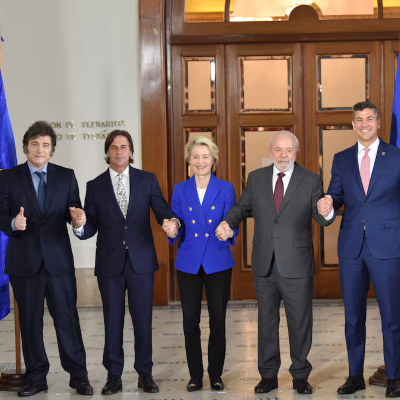
World Footwear’s new guide is designed to help companies on both sides of the Atlantic examine what the agreement could mean for the products they sell, source and manufacture
The same trade agreement can have different implications for companies exporting from Brazil to the EU or from Portugal to Mercosur, for example. Each needs to know how their products are affected, when tariff reductions will take effect, and what conditions must be met to qualify.
World Footwear has published a guide to help companies navigate these questions. Produced by APICCAPS, the study examines the EU–Mercosur Interim Trade Agreement from the perspective of footwear, footwear components, leather goods, and hides and leather. It is intended for manufacturers, exporters, and importers in both the EU and Mercosur, regardless of which side of the trade relationship they operate on. Companies based elsewhere can also use it to assess the potential impact of trade between the two regions on their markets or supply chains.
From the agreement to the product
The guide begins by setting out the wider context: the relationship between the EU and Mercosur, the distinction between the Interim Trade Agreement and the broader Partnership Agreement, and the place of the footwear cluster in trade between the two regions.It then addresses the questions relevant to a particular product. Is it covered by a tariff reduction? If so, when does the reduction take effect? Does the answer change depending on whether the goods enter the EU or Mercosur? The guide examines each product group for both directions of trade and provides detailed tariff schedules for companies that need more specific information.
From eligibility to paperwork
The guide also takes companies through the administrative steps required to claim a preferential tariff. It provides guidance on assessing whether a product meets the applicable rule of origin, the types of proof of origin is available for each export route, and the respective responsibilities of exporters and importers.It provides the prescribed origin documents and practical instructions for completing them, including the Statement on Origin and the transitional certificate, available to Mercosur exporters. It also covers exporter registration if required, how the importer claims preferential treatment, the supporting records companies must keep and what happens if customs authorities verify a claim. A checklist brings all these steps together, from identifying the product’s tariff classification, to preparing the origin evidence, to making an import claim.
Useful on both sides of a transaction
A Mercosur manufacturer considering selling to an EU customer can use the guide to investigate how its product will be treated and the conditions for claiming a preference. Similarly, an EU manufacturer considering a Mercosur customer can do the same for the journey in the opposite direction. Importers in either region can use it the guide to assess potential sources of footwear, materials, or components. Companies focused on their domestic market can also use it to examine how changing access may affect competition.The commercial implications will differ by company and product. This guide provides businesses, regardless of their location, with a structured way to examine both the commercial opportunities and the steps required to leverage them. As tariff classification, origin and customs formalities depend on the details of each transaction, companies should verify the requirements currently in force and seek specialist legal, customs or commercial advice as necessary.
Related news





-
-

World Footwear Public Calendar
Click here to subscribe an updated version of the calendar displaying the footwear trade shows.
-
-
-

-
Media Partners
Media Partners
-

Revista del Calzado

MPA Style

Schuhkurier

Fotoshoe