


Mario Jorge Machado re-elected EURATEX President
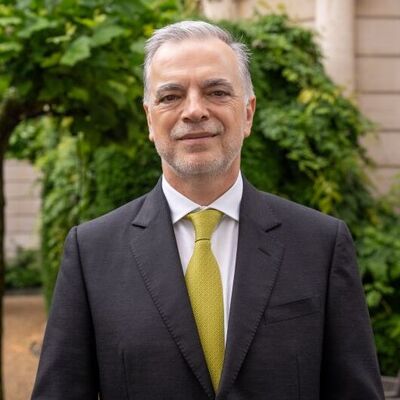
The European Apparel and Textile Confederation’s re-elected President is set to push for fair competition, better import controls and a transition that strengthens rather than weakens the industry
“My priority for this new mandate is clear: to strengthen the competitiveness of our industry, ensure that the same rules apply to all products sold in Europe and support our companies through the green and digital transition. Europe must decarbonise its industry, not deindustrialise it”, shares Mario Jorge Machado, re-elected President of the European Apparel and Textile Confederation (EURATEX).
The EURATEX General Assembly has re-elected Mario Jorge Machado as President of the Confederation, renewing his mandate at a challenging moment for Europe’s textile and clothing industry. The sector continues to face rising costs, stronger global competition and mounting pressure to advance sustainability and digitalisation.
Machado, who holds a degree in Production Polymer Engineering from the University of Minho in Portugal, brings extensive industrial experience to the role. His renewed presidency is expected to focus on innovation, competitiveness and a sustainable transformation that remains compatible with the realities of European manufacturing.
The presidency team will include Franz Peter Falke of T+M in Germany, Barbara Cimmino of Confindustria Moda in Italy, Ismail Kolunsag of IHKIB in Türkiye and Grégory Marchant of UIT in France.
Priorities
Competitiveness will be a central priority of the new mandate. Machado has argued that it must be the foundation of industrial policy, since investment, innovation, sustainability and strategic autonomy depend on companies being able to operate in a viable business environment.
In practical terms, EURATEX is expected to continue advocating stronger support for investment in automation, digitalisation, artificial intelligence, skills and innovation, particularly for small and medium-sized enterprises. The aim is to strengthen companies’ capacity to adapt while remaining anchored in Europe.
A second priority is creating a genuine level playing field. Machado has called for the same rules to apply to all products sold in Europe, not only those manufactured within the region, with stronger market surveillance, border enforcement and controls on imports sold through digital platforms.
This agenda is tied to concerns that European companies can be placed at a disadvantage when imported goods bypass EU safety, environmental and consumer protection requirements. EURATEX is therefore set to continue pressing for fair competition, equal enforcement and a market where compliance is recognised rather than penalised.
The third priority is to ensure that the green and digital transition strengthens the industry rather than adding unmanageable pressure. Machado has stressed that sustainability should become a source of competitiveness, supported by realistic rules, affordable energy, workable implementation and targeted assistance.
Image Credits: linkedin.com
Related news



Related Organizations

-

-

World Footwear Public Calendar
Click here to subscribe an updated version of the calendar displaying the footwear trade shows.
-

-
-

Media Partners
Media Partners
-

UNIT Publishing House

SHOES-MAGAZINE.COM

Revista del Calzado

ARS ARPEL