
Register to continue reading for free
Edvin Prençe, President of ProEksport: towards a more value-added footwear industry in Albania
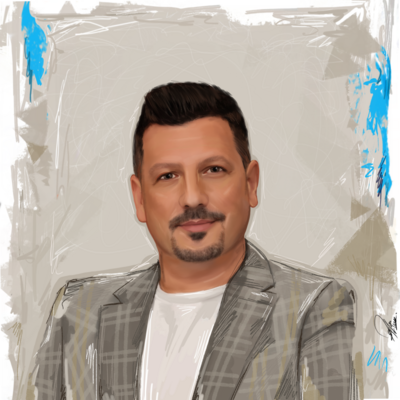
We spoke to Edvin Prençe, President of ProEksport, the official representative body for Albania’s clothing and footwear industry. Among other topics, we discussed ProEksport’s role in the country, the importance of multi-country partnerships and the current state and future of the sector in Albania
Edvin Prençe is the President of ProEksport Albania, the official representative of the Albanian clothing and footwear industry. ProEksport acts as the umbrella body and coordinating platform for Albania’s garment and footwear manufacturers, representing roughly 700 active factories and an estimated workforce of more than 65,000 people, most of whom are women.
Activities
According to Prençe, “we engage continuously with the Albanian Government, customs authorities and international institutions to address structural barriers affecting exporters, such as customs regimes, origin rules, fiscal treatment, labor costs and access to finance”.
ProEksport is also an active member of the National Council of Labour, the National Council of Investments and the SME (small and medium-sized enterprises) Council in Albania, “allowing us to directly represent the interests of manufacturers at the highest policy-making level. Our objective is to ensure that Albanian manufacturers can compete on equal terms with producers in other Mediterranean and EU-neighbouring countries”, the President shares.
Alongside its advocacy work, ProEksport’s focuses on competitiveness and factory transformation as European buyers tighten expectations on speed, quality, traceability and compliance with EU standards. He also highlights that the association “actively connects Albanian firms to EU-funded projects, innovation pilots and cross-border industrial partnerships”, helping them move from subcontracting toward higher value-added production.
On the market side, the organisation is working to reposition Albania as a near-shoring manufacturing partner for Europe. “We promote the sector internationally, build links with European brands, clusters and technology providers, and support factories in accessing new markets and upgrading their role within European value chains”, he shares.
In a context of rising costs, geopolitical uncertainty and shifting supply chains, ProEksport's mission remains clear: “to help Albanian footwear and garment manufacturers not just survive, but structurally adapt, modernise and remain competitive in the European market”.
Industry
Albania’s footwear sector is “currently experiencing a phase of resilience rather than growth”, as production volumes and export demand have levelled off after a period marked by inflation, energy shocks and weaker consumer demand across key European markets.
Employment has largely been maintained, reflecting the industry’s importance, but this stability has come at the cost of tighter margins and reduced room for investment. Regarding exports, the sector “remains highly concentrated in a limited number of EU markets, primarily Italy, and is still dominated by subcontracting models” that limit domestic value capture and heighten exposure to external uncertainty.
The main pressures are structural: “rising production costs”, mainly due to wages, energy and logistics costs without matching productivity gains; competitive disadvantages versus regional peers linked to trade and customs frameworks; “labour shortages and skills gaps” intensified by emigration and demographic change; constrained access to finance for technology, sustainability upgrades and working capital; and heightened buyer demands for compliance, traceability and sustainability, which “requires rapid adaptation”.
Despite these challenges, “the sector retains strong fundamentals, including experienced labour, proximity to EU markets, flexibility and long-standing industrial know-how”. The central question is less about the sector’s ability to endure, “but whether it will be enabled to transform, from a cost-driven subcontracting sector into a competitive, value-added and EU-integrated manufacturing industry”, Prençe notes.
Digi4Wearables
Digi4Wearables is a European cooperation project with the participation of CTCP (the Portuguese Footwear Technology Centre) that aims to speed up the digital and technological transition of footwear and textile manufacturing industries, with an emphasis on practical changes that SMEs can implement.
In Albania, “the project addresses a very concrete gap: many factories operate with solid production know-how, but limited integration of digital tools across design, development, production planning and data management”, the President shares. The project involves training, applied experimentation and direct collaboration among manufacturers, universities and technology providers.
The training activities focus on digital design and product development, including systems that can shorten lead times and improve accuracy. It also covers digital pattern-making and prototyping. Another strand concentrates on process optimisation and data-driven production planning. Sustainability and traceability requirements are introduced earlier in the development process to embed compliance considerations into design choices.
According to Prençe, “a key element of the project is helping companies understand how digital tools can reduce development time, minimise errors and waste, and improve communication with European buyers” by standardising information flows and enabling faster, clearer feedback loops during sampling and production. This can help reduce waste and quality inconsistencies.
European-level initiatives of this kind also address gaps that domestic efforts alone may struggle to fill, notably by bringing funding, shared methodologies and exposure to advanced industrial ecosystems. However, the ProEksport President highlights that these initiatives “do not replace national efforts; they amplify them”.
Future
Albania aims to be positioned as a near-shoring base for the European footwear market over the next five to ten years, with an emphasis on reliability, flexibility and consistent quality rather than competing purely on low costs.
This outlook reflects a broader shift in sourcing priorities, as European buyers seek shorter lead times and more predictable supply, amid a context where long-distance production exposes them to greater logistics risk and a rising compliance burden. In this context, Prençe argues that this transition becomes a “competitive necessity”.
“Albania is uniquely positioned to respond to this context. We offer decades of accumulated industrial experience, a workforce deeply specialised in footwear production and a manufacturing culture shaped by long-term collaboration with leading European brands”, the ProEksport President notes.
“My vision is for Albania to move decisively from being perceived mainly as a subcontracting destination to becoming an integrated production partner”, capable of contributing to design adaptation, rapid prototyping, sustainability compliance, including greater involvement in design adaptation, rapid prototyping, sustainability compliance and more digitalised production processes.
With supportive industrial policies, stronger skills development and increased investment in technology and sustainability, Albania could establish a long-term position at the heart of Europe's footwear value chain.
“Our vision as a sector is clear and can be summarised in our guiding motto: Produce in Albania. Wear in Europe”.
Image Credits: Art by Sofia Pádua