


Yue Yuen revenue falls in 2025 despite resilient manufacturing

The Hong Kong-based footwear manufacturer reported a year-on-year decline in revenue of 1.8% in 2025. The manufacturing business showed resilience in a year marked by weakness in the retail sector
In the last financial year, Yue Yuen reported a revenue of 8.03 billion US dollars, which represents a 1.8% decrease compared to 2024.
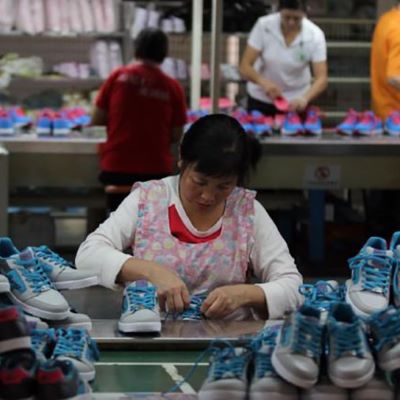
The footwear manufacturing activity (including athletic/outdoor shoes, casual shoes, and sports sandals) generated 5.30 billion US dollars in 2025, reflecting a 2.5% year-on-year increase. Although shipment volumes decreased slightly to 252.2 million pairs due to cautious brand procurement and a high comparison base, the average selling price increased to 21.00 US dollars per pair, reflecting a shift towards higher-quality orders.
Meanwhile, the group’s total revenue from its manufacturing business (including footwear, as well as soles, and components) increased by 0.5% year-on-year, reaching 5.65 billion US dollars in 2025. However, this was insufficient to offset the 7.0% fall in Pou Sheng’s revenue amid weak consumer demand and foot traffic. Declines in physical retail were partly offset by strong digital growth, while the store network was streamlined.
In 2025, Yue Yuen’s gross profit fell by 8.3% to 1.83 billion US dollars, on a comparable basis to the previous year, with the overall gross profit margin decreasing by 1.6 percentage points year-on-year to 22.8%. This decline reflects lower profitability in both manufacturing and retail: manufacturing margins were impacted by operational inefficiencies and higher labour costs, while Pou Sheng’s fell due to heavy promotions and increased discounting.
Ultimately, profit attributable to owners of the company dropped by 2.9% year-on-year to 381.1 million US dollars in 2025. Although profits in the manufacturing business increased by 3.7% year-on-year, this was offset by a sharp 57.1% drop in Pou Sheng’s profit due to lower sales.
Looking ahead, Yue Yuen expressed optimism regarding the long-term demand for sportswear. However, in the short-term, it expects volatility in 2026 due to tariffs, inflation, and geopolitical risks. These factors will lead to fluctuating orders and short-term production inefficiencies.
“The group remains committed to its mid-to-long-term capacity allocation strategy. This includes diversifying its manufacturing capacity into regions such as Indonesia and India, where labor supply and infrastructure are supportive of sustainable growth”, reads the statement.
Image Credits: Ruslan Bardash on Unsplash
Related news





Related Events
Related Organizations

-
-

World Footwear Public Calendar
Click here to subscribe an updated version of the calendar displaying the footwear trade shows.
-

-

-

Media Partners
Media Partners
-

La Conceria

Shoes Report

Fotoshoe

UNIT Publishing House