


US import cargo volume expected to decline in the first half

Amid tariff uncertainty, US import cargo volumes are expected to fall in the first half of 2026. The potential impact of tensions with Iran on shipping remains unclear
According to the latest Global Port Tracker report from the National Retail Federation (NRF) and Hackett Associates, US import cargo volumes at major container ports are expected to decrease in the first half of 2026. This slowdown is mainly attributed to ongoing uncertainty surrounding US trade tariffs.
The report projects total imports of around 12.21 million twenty-foot equivalent units (TEU) during the first six months of 2026, which is a 2.5% decrease compared to the same period in 2025. January volumes reached 2.08 million TEUs, which is slightly higher than in December, but 6.4% lower than in the same month last year, indicating weaker import demand.
“The Supreme Court has struck down IEEPA (International Emergency Economic Powers Act) tariffs, but other tariffs have already been announced and others will be coming, so uncertainty continues for retailers. The need for clear and predictable trade policy remains, and long-term planning continues to be difficult for merchants and other businesses”, NRF Vice President for Supply Chain and Customs Policy Jonathan Gold said.
Last month, the Supreme Court ruled against the administration’s use of tariffs under the IEEPA. President Donald Trump responded by announcing a 150-day temporary tariff of 10%, which the administration later said could be increased to 15%. The administration is also considering launching a series of new Section 301 trade investigations.
Ben Hackett, founder of Hackett Associates, also said that the conflict in Iran has not yet had a significant impact on US container imports, as relatively little cargo bound for the United States originates from the region.
However, “increasing oil and gasoline prices will inevitably drive structural inflation if the conflict persists. That, in turn, could squeeze consumer discretionary spending and US manufacturing, and ultimately drive down import volumes in the longer term”, he concluded.
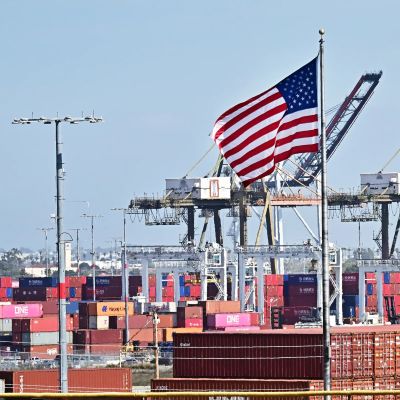
Image Credits: massmarketretailers.com
Related news





Related Events
Related Organizations

-

-

World Footwear Public Calendar
Click here to subscribe an updated version of the calendar displaying the footwear trade shows.
-

-

-

Media Partners
Media Partners
-

Shoe Intelligence

UNIT Publishing House

MPA Style

SERMA